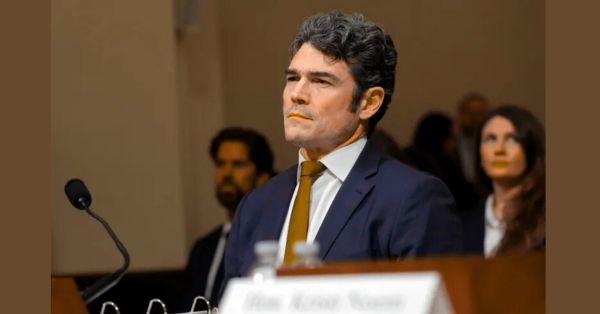
Who Is Joe Kent, and Why Did He Resign as Trump’s Counterterrorism Chief? – Politics in Washington rarely runs short of dramatic moments. But every once in a while, a resignation shakes the foundations of an administration and sparks intense debate across the political spectrum. That is exactly what happened when Joe Kent abruptly stepped down as the director of the United States National Counterterrorism Center in March 2026.
The move stunned many observers. Kent was not just another bureaucrat quietly working behind the scenes. He was a decorated military veteran, a former intelligence operative, and a vocal supporter of Donald Trump. His resignation therefore raised a pressing question: why would a loyal figure in the administration walk away from one of the most powerful security positions in the country?
To understand the full story, we need to look beyond the headlines. Kent’s resignation was not simply about a job change. It was rooted in deep disagreements over war, intelligence assessments, and the direction of American foreign policy.
Who Is Joe Kent
Before entering the political spotlight, Joe Kent built a career that reads like a script from a military thriller.
Born in 1980 in Oregon, Kent joined the United States Army and spent about two decades serving in some of the most dangerous parts of the world. During that time he became a Green Beret and completed multiple combat deployments in the Middle East as part of the global war on terror.
His military career placed him at the heart of special operations missions in countries where terrorist networks were active. These experiences shaped his worldview and eventually led him into intelligence work. After retiring from the Army in 2018, Kent continued serving the national security community as a paramilitary officer with the Central Intelligence Agency.
But Kent’s life was marked by personal tragedy as well. His first wife, Navy Senior Chief Petty Officer Shannon Kent, was killed in a suicide bombing while deployed in Syria in 2019. The loss deeply affected him and influenced his views on American military interventions.
Following his intelligence work, Kent entered politics and became associated with the conservative movement in the United States. He ran twice for Congress and became known as a strong supporter of former President Donald Trump.
Rise to America’s Top Counterterrorism Job
Kent’s political alignment with Trump eventually opened the door to one of the most important national security positions in the United States.
In 2025, President Donald Trump nominated him to lead the National Counterterrorism Center. The agency serves as the central hub for analyzing terrorism threats and coordinating intelligence among various security agencies. (Wikipedia)
This role is extremely influential. The director acts as a key adviser to the president on terrorism threats and helps integrate intelligence from agencies like the CIA, FBI, and Department of Defense.
After Senate confirmation, Kent officially took office in July 2025. His appointment immediately attracted attention because of both his military background and his strong ideological views.
Supporters believed his battlefield experience made him uniquely qualified to understand global threats. Critics, however, questioned his political associations and controversial statements during his congressional campaigns.
Despite the controversy, Kent quickly became a central figure in shaping counterterrorism discussions within the Trump administration.
The War That Triggered the Resignation
The turning point came during escalating tensions between the United States and Iran.
In early 2026, the Trump administration launched military operations against Iran, arguing that Tehran posed an immediate threat to American interests and security.
The decision triggered fierce debate in Washington. Some officials supported the military action as necessary to prevent potential attacks or nuclear escalation. Others questioned whether the intelligence truly justified a war.
Joe Kent belonged firmly in the second camp.
In a striking move, he publicly stated that Iran did not pose an imminent threat to the United States based on the intelligence he had seen. (AP News)
For someone serving as the nation’s top counterterrorism official, that statement carried enormous weight.
Soon after, Kent made the decision that would dominate headlines across the world.
Why Joe Kent Resigned
On March 17, 2026, Kent announced that he was resigning from his position as director of the National Counterterrorism Center.
In his resignation message, he explained that he could not support the war against Iran.
Kent said he believed the conflict was unnecessary and not supported by the intelligence available to him. According to his statements, Iran was not an immediate danger that justified launching military action. (The Washington Post)
His departure therefore became one of the first high level resignations in protest of the administration’s foreign policy decision.
But Kent’s resignation letter went even further.
He argued that political pressure and misinformation had influenced the decision to go to war. In particular, he claimed that external actors and political lobbying had helped push the United States toward military conflict. (The Guardian)
These remarks quickly ignited a storm of controversy.
Trump’s Reaction
President Donald Trump did not hold back when responding to Kent’s resignation.
Shortly after the announcement, Trump publicly criticized his former counterterrorism chief. He described Kent as “weak on security” and defended the administration’s decision to confront Iran. (The Guardian)
From the president’s perspective, Iran represented a serious threat that required decisive action. The disagreement between Trump and Kent therefore reflected a much larger divide about how the United States should handle global security challenges.
Read: The Biggest Dating Mistakes People Make
For Trump’s supporters, the resignation reinforced the argument that strong leadership sometimes requires ignoring dissent within government ranks.
For critics of the war, Kent’s departure became evidence that even insiders questioned the administration’s justification for military action.
Political Controversies Surrounding Kent
Joe Kent’s career has never been free from controversy.
Even before his appointment to lead the counterterrorism center, critics had raised concerns about his political associations and public statements.
During his campaigns for Congress, Kent faced scrutiny over connections with far right figures and for promoting controversial claims about the 2020 United States election and the January 6 Capitol attack.
These issues resurfaced during his Senate confirmation process. Lawmakers debated whether someone with such polarizing views should oversee the nation’s counterterrorism strategy.
Supporters argued that his military service and intelligence experience outweighed political disagreements. Opponents warned that his views could politicize national security work.
When Kent resigned in protest of the Iran war, those debates returned once again to the forefront.
What His Resignation Means for the Trump Administration
The resignation of a senior intelligence official always sends ripples through government circles.
In this case, the departure of Joe Kent highlighted deep divisions inside the Trump administration over foreign policy.
Some officials supported a more aggressive approach toward Iran and other geopolitical rivals. Others believed the United States should avoid entering another prolonged conflict in the Middle East.
Kent’s decision made those disagreements visible to the public.
Political analysts also noted that resignations like this can influence how the public views a war. When insiders question the rationale for military action, it can raise doubts among voters and lawmakers.
At the same time, administrations often move quickly to replace departing officials and maintain continuity in national security leadership.
The Broader Debate About War and Intelligence
Kent’s resignation also revived a long running debate in American politics.
How should intelligence information be used when making decisions about war?
Throughout modern history, intelligence assessments have played a crucial role in shaping foreign policy. However, disagreements sometimes emerge between intelligence professionals and political leaders.
In Kent’s case, the disagreement was unusually public.
By stepping down rather than continuing to serve quietly, he sent a clear message that he fundamentally disagreed with the direction of policy.
For many observers, the situation echoed earlier historical moments when officials resigned rather than support decisions they believed were wrong.
What Comes Next for Joe Kent
After leaving government, Joe Kent remains a prominent figure in American political discussions.
Given his military record, intelligence background, and political connections, it is likely that he will continue to influence debates about national security and foreign policy.
Some analysts believe he could return to politics, possibly running for public office again. Others expect him to become a commentator or adviser on security issues.
Whatever path he chooses, his resignation has already cemented his place in one of the most dramatic political episodes of 2026.
Final Thoughts
Joe Kent’s resignation as counterterrorism chief was far more than a routine personnel change.
It was a moment that revealed tensions inside the highest levels of government, highlighted disagreements over war strategy, and sparked a broader conversation about how intelligence should guide political decisions.
For supporters of the Trump administration, the episode reinforced the idea that leadership requires bold action even in the face of dissent.
For critics, it served as a reminder that sometimes the most powerful statement an official can make is to walk away.
And in the unpredictable world of global politics, moments like this rarely mark the end of the story. More often, they are just the beginning of the next chapter.